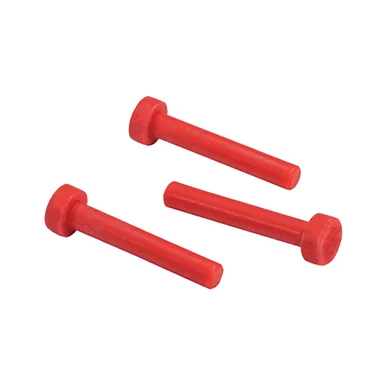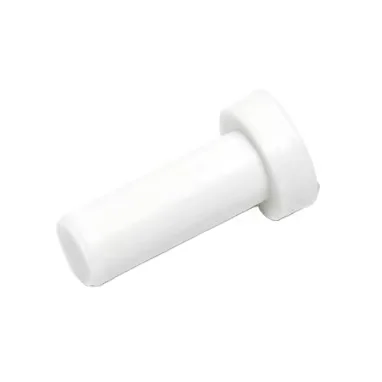

Home » Product » Automotive Series » Branded Connector » Deutsch Connector » DEUTSCH Sealing Plug
Provide Outstanding Sealing Capabilities,Effectively Prevents The Ingress Of Moisture, Dust, And Other Contaminants
Crafted From Top - Notch Materials, Offers Exceptional Durability. Resistant To Wear, Tear, And Degradation Over Time
Suitable For Various Types Of Connectors, Enclosures, And Mechanical Assemblies
Its Accurate Dimensions And Design Allow For Seamless Integration With Mating Parts
Reduces The Need For Costly Repairs Or Replacements Of The Protected Parts
It Has Been Tested And Verified In Various Conditions To Ensure Consistent Sealing And Protection


The performance indicators of DEUSCH rubber seals mainly include the following aspects:
1. **Physical and mechanical properties**:
– **Hardness**: The hardness of the rubber seal is an important indicator that affects its sealing performance and wear resistance. Appropriate hardness ensures that the seal can maintain good shape and sealing effect under different working conditions. For example, a harder seal may be more suitable for high-pressure environments, while a softer seal may be better for applications requiring better flexibility.
– **Tensile strength**: It reflects the ability of the rubber seal to resist tensile forces. High tensile strength means that the seal can maintain its integrity and sealing performance when subjected to stretching or pulling forces during installation or use.
– **Elongation at break**: This indicates the extent to which the rubber seal can be stretched before breaking. A higher elongation at break value means better flexibility and adaptability of the seal, which is beneficial for installation in complex sealing structures and for withstanding certain degrees of deformation.
– **Compression set**: After being compressed for a long time, the rubber seal may have a certain degree of permanent deformation. A lower compression set value indicates that the seal can better maintain its original shape and sealing performance after being compressed, ensuring long-term stability of the sealing effect.
2. **Sealing performance**:
– **Leakage rate**: It is a key indicator to evaluate the sealing performance of the rubber seal. A low leakage rate means that the seal can effectively prevent the leakage of fluids or gases, ensuring the normal operation of the sealed system. The leakage rate is closely related to factors such as the material, structure, and installation quality of the seal.
– **Sealing force**: The sealing force refers to the force exerted by the rubber seal on the sealing surface to achieve a tight seal. Sufficient sealing force is necessary to ensure that the seal can closely adhere to the sealing surface and resist the pressure of the medium inside the sealed system to prevent leakage.
– **Dynamic sealing performance**: For applications where there is relative movement between the sealing parts, such as rotating shafts or reciprocating rods, the dynamic sealing performance of the rubber seal is crucial. It requires the seal to maintain good sealing performance while withstanding friction, wear, and the impact of movement, and to ensure that there is no leakage during the movement process.
3. **Temperature resistance**:
– **Low-temperature resistance**: In some low-temperature environments, the rubber seal needs to maintain good flexibility and sealing performance. The low-temperature resistance of the seal is reflected in its ability to maintain normal physical and chemical properties and sealing effect at low temperatures without becoming brittle or cracking.
– **High-temperature resistance**: In high-temperature working conditions, the rubber seal must be able to withstand high temperatures without significant deformation, aging, or loss of sealing performance. The high-temperature resistance of the seal is related to the material selection and formulation of the rubber, as well as the design and manufacturing process of the seal.
4. **Chemical resistance**: Depending on the specific application environment, the rubber seal may come into contact with various chemical substances, such as acids, alkalis, oils, and solvents. Therefore, it needs to have certain chemical resistance to resist the erosion of these chemical substances and maintain its sealing performance and physical properties.
5. **Aging resistance**: Over time, the rubber seal may be affected by factors such as oxygen, ozone, ultraviolet radiation, and heat, resulting in aging and deterioration. Good aging resistance means that the seal can maintain its performance and service life for a long time under normal use and storage conditions, reducing the frequency of replacement and maintenance.
The advantages of DEUSCH rubber seals are as follows:
1. **High-quality materials**:
– **Diverse material options**: DEUSCH rubber seals are made from a variety of high-quality rubber materials such as nitrile rubber, ethylene propylene diene monomer (EPDM) rubber, and silicone rubber. Each material has its own unique properties. For example, nitrile rubber seals have excellent oil resistance, making them suitable for applications where there is contact with oil; EPDM rubber seals have outstanding weather resistance, ozone resistance, and heat resistance, enabling them to be used in harsh environments and at higher temperatures; silicone rubber seals have excellent high and low temperature resistance, maintaining good elasticity and sealing performance in extreme temperature conditions.
– **Stable performance**: The high-quality raw materials ensure the stable physical and chemical properties of the rubber seals under various working conditions, with good resistance to aging, corrosion, and wear, resulting in a long service life.
2. **Exquisite design**:
– **Diverse structure forms**: According to different application scenarios and sealing requirements, DEUSCH offers a variety of structure designs for rubber seals, such as O-ring seals, lip seals, rectangular seals, and special-shaped seals. These different structures can meet the sealing needs of different equipment and components, ensuring the effectiveness of the sealing.
– **Precise size**: DEUSCH pays strict attention to size control during the production process, ensuring that the seals fit tightly with the installation parts, effectively preventing leakage and ensuring the normal operation of the equipment.
3. **Superior sealing performance**:
– **Reliable static sealing**: In static applications, DEUSCH rubber seals can closely adhere to the sealing surface, forming a good seal to prevent the intrusion of gases, liquids, or dust. This helps protect the internal components of the equipment from being damaged by external pollutants.
– **Good dynamic sealing**: In dynamic applications, such as the sealing of rotating shafts, the seals can adapt to the rotational movement of the shafts, maintaining good sealing performance while reducing friction and wear. This ensures the stability and reliability of the equipment during operation.
4. **Wide application range**: DEUSCH rubber seals are widely used in various industries such as automotive, aerospace, electronics, machinery, and electrical. They can meet the sealing requirements of different working environments and equipment, showing strong adaptability.
5. **Good quality control**: DEUSCH has a strict quality control system in the production process, ensuring the consistency and reliability of the quality of each rubber seal. This enables users to use the products with confidence and reduces the risk of product failure.
DEUSCH rubber Seal are available in a wide variety of sizes and specifications, and the following are some common types:
1. **Categorized by shape**:
– **O-type seals**: This is the most common type and its dimensions are usually expressed in terms of inner diameter (ID) and cross sectional diameter (CS). For example, there may be O-type Dürcher seals with an ID of 10 mm and a cross-sectional diameter of 2 mm, which are suitable for a variety of applications where static or dynamic sealing is required, such as pipeline connections, sealing of mechanical components, etc. The O-type Dürcher seals are available in a wide range of sizes and sizes.
– **Lip seals**: These seals have a lip structure and can be divided into single- and double-lip. Its size specifications in addition to the basic outer diameter, inner diameter and thickness, the shape, size and angle of the lip is also an important parameter. For example, a lip seal with an outer diameter of 50mm, an inner diameter of 40mm and a thickness of 8mm is commonly used for sealing rotating shafts and can effectively prevent liquid or gas leakage when the shaft is rotating.
– **Rectangular sealing ring**: the shape is rectangular, the size is generally expressed in length, width and height. For example, a rectangular seal with a length of 30mm, a width of 20mm and a height of 5mm is suitable for sealing flat flanges and other parts of the seal, providing a larger sealing area and better sealing effect.
2. **Categorization by series**: Different product series of DEUSCH rubber Seal have corresponding sealing ring sizes and specifications:
– For some connector series, there will be adapted seals, the size of which depends on the specific model and requirements of the connector. For example, in DELCHI’s automotive connector series, there may be seals adapted to a specific connector model with dimensions that match the connector’s interface dimensions to ensure a good sealing performance.
– In other industrial application series, such as hydraulic systems and pneumatic systems, there may also be specially designed seals. For example, in the hydraulic system, there may be seals for the piston of the hydraulic cylinder, the size of which should be determined according to the parameters such as the inner diameter of the hydraulic cylinder and the outer diameter of the piston.
3. **Categorized by special purpose**:
– Waterproof seals: For applications where waterproofing is required, such as outdoor electrical equipment, automotive electronic components, etc., DELCHI will have specialized waterproof seals. The dimensions and specifications of these seals are designed according to the specific waterproofing requirements and application scenarios to ensure that they can effectively block the intrusion of water.
– Oil-resistant seals: For contact with oil-based media, DEUSCH rubber Seal has oil-resistant seals with special material and structural design. Their dimensional specifications are selected according to the specific operating environment and equipment requirements to ensure long-term stable operation in oil-based media.
DUTCH seals are components used for sealing in products related to the DUTCH brand and have a variety of characteristics and application scenarios:
1. **Wide range of application areas**:
– **Automotive industry**: In the electrical system, engine, gearbox and other parts of the automobile, DELCH seals play a role in waterproofing, dustproofing, oilproofing and vibration damping to ensure the normal operation of the automobile parts. For example, between the cylinder block and cylinder head, between the oil sump and the engine body, etc., DELCHI seals prevent oil leakage and ensure normal lubrication and operation of the engine.
– **Aerospace field**: The reliability and sealing of components in this field requires a high degree of reliability. DELCHI seals maintain good sealing performance under extreme temperatures, pressures and vibrations, and are widely used in aircraft engines, landing gears, hatches and other parts of the aircraft.
– **Electronic equipment field**: Used in the shell sealing of electronic equipment, connector sealing, etc., to prevent dust, moisture and other pollutants from entering into the internal equipment, and to protect the electronic components from damage. For example, DELCHI seals are often used in the interfaces and battery compartments of cell phones, computers, cameras and other electronic devices.
– **Industrial machinery**: In all kinds of machinery and equipment, such as pumps, valves, compressors, etc., DELCHI seals are used to seal rotating shafts, pistons, flanges, etc., to prevent fluid leakage and to ensure the normal operation of machinery and equipment.
2. **Materials of high quality and variety**:
– **Rubber materials**: The rubber materials commonly used for DELCHI seals are nitrile rubber, EPDM rubber, silicone rubber and so on. Nitrile rubber seals have good oil resistance and are suitable for applications in contact with oil media; EPDM rubber seals have excellent weather resistance, ozone resistance and heat resistance and can be used in harsh outdoor environments and at higher temperatures; silicone rubber seals have excellent resistance to high and low temperatures, and are able to maintain good elasticity and sealing performance under extreme temperature conditions.
– **Thermoplastic**: Some DELCHI seals are made of thermoplastic, which has good plasticity, abrasion resistance and chemical resistance, and at the same time is easy to be processed and molded to meet the sealing needs of different shapes and sizes.
3. **Excellent design and manufacturing process**:
– **Structural design**: According to different application scenarios and sealing requirements, DELCHI seals are designed in a variety of structural forms, such as O-rings, lip seals, rectangular seals, profiled seals, etc. O-rings are simple in structure and easy to install, and are suitable for a variety of static and dynamic sealing occasions; lip seals are commonly used for rotary shaft sealing due to their good sealing performance and wear resistance; rectangular seals are suitable for flat flanges and other parts; and rectangular seals are suitable for sealing of flat flanges and other parts. Rectangular sealing rings are suitable for sealing of flat flange and other parts.
– **Manufacturing process**: Advanced manufacturing process, such as injection molding, molding, etc., to ensure the dimensional accuracy and quality stability of the sealing ring. Strict control of production parameters, such as temperature, pressure, time, etc., to ensure that the physical and chemical properties of the seal meet the requirements.
To fix the DEUSCH rubber seal on a car door, follow these steps:
1. **Inspect the Seal**: Check for tears, cracks, or areas where it may have come loose.
2. **Clean the Area**: Use soap and water to clean the door frame and the rubber seal to ensure good adhesion.
3. **Reattach Loose Sections**: If the seal is simply detached, use weatherstrip adhesive to secure it back in place. Apply the adhesive, press the seal firmly, and hold it until set.
4. **Replace Damaged Sections**: For torn or damaged seals, cut out the damaged part and replace it with a new section of rubber seal. Use adhesive to attach it.
5. **Check Alignment**: Make sure the seal aligns properly with the door frame to prevent leaks.
6. **Test the Seal**: Close the door and check for any gaps. Make adjustments as necessary.
Always refer to your vehicle’s manual for specific instructions or consult a professional if needed.