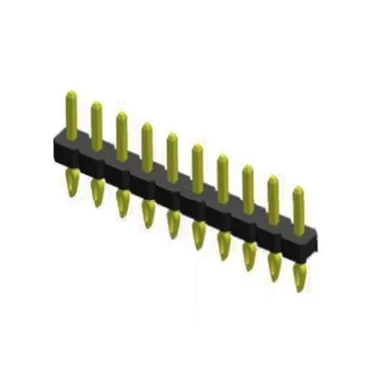
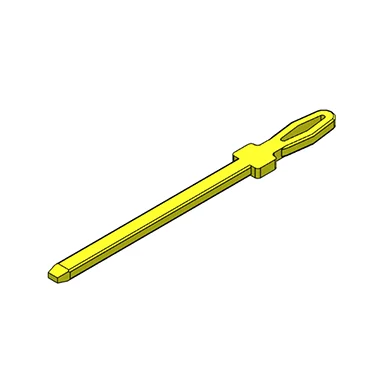
Home » Product » Automotive Series » Press-Fit Connections
With No Need For Soldering Or Complex Fastening Techniques, Connections Can Be Made Quickly And Easily
Resistant To Vibration, Shock, And Other Mechanical Stresses, Ensuring A Continuous Electrical Connection
Eliminate The Potential Issues Associated With Soldering, Such As Solder Joint Defects, Flux Residue, And Overheating Damage.
Saving On Labor Costs Due To Rapid Assembly, It Is Cost - Effective In Terms Of Material Usage.
The Tight Fit Between The Mating Parts Ensures Low - Resistance Electrical Paths, Enabling Efficient Power And Signal Transfer
They Can Be Used With A Variety Of Component Geometries And Materials



When designing a press – fit connection, several factors need to be carefully considered:
### 1. Component Materials
– **Mechanical Properties**
– **Strength and Hardness**: The strength and hardness of the materials used for both the male and female components are crucial. For example, if the male component is too hard and the female component is relatively soft, excessive deformation of the female part may occur during the press – fit process, leading to potential damage or an unreliable connection. On the other hand, if both components are too soft, the connection may not have sufficient mechanical strength to withstand applied loads.
– **Elasticity and Ductility**: Materials with appropriate elasticity and ductility are preferred. Elasticity allows the female component to deform during the press – fit operation and then return to a stable state, creating a tight frictional hold on the male part. Ductility ensures that the material can withstand the deformation without cracking or breaking.
– **Coefficient of Thermal Expansion (CTE)**
– In applications where temperature variations are expected, the CTE of the materials should be considered. If the male and female components have significantly different CTEs, changes in temperature can cause the fit to loosen or tighten excessively. For example, in an electronic device where a press – fit connection is used on a printed circuit board (PCB), the CTE of the metal pin (male component) and the PCB material (female component) should be compatible to maintain a reliable connection over a wide temperature range.
### 2. Geometric Dimensions
– **Interference Fit**
– **Interference Amount**: Determining the appropriate amount of interference between the male and female components is critical. Too little interference may result in a loose connection that can lead to vibration-induced loosening or poor electrical conductivity (if applicable). Excessive interference can cause excessive stress in the components, potentially leading to cracking, deformation, or even failure. The interference amount is typically determined based on the materials’ properties, the expected loads, and the application requirements.
– **Tolerance Control**: Precise control of the dimensions of both the male and female parts is essential. Manufacturing tolerances need to be carefully defined to ensure that the interference fit is within the acceptable range. Tight tolerances may increase manufacturing costs but are necessary for reliable connections, especially in high – precision applications.
– **Shape and Surface Finish**
– **Male Component Shape**: The shape of the male component, such as whether it is a round pin, a square post, or a more complex shape, affects the press – fit process. A round pin is commonly used for its simplicity and ease of insertion, but in some cases, a non – circular shape may be required for alignment or to prevent rotation.
– **Chamfer and Corner Radius**: A chamfer or rounded corner on the leading edge of the male component can ease the insertion process, reducing the likelihood of damage to the female component during press – fitting.
– **Surface Finish**: A smooth surface finish on both the male and female components is desirable. A rough surface can increase the friction during insertion, making the process more difficult and potentially causing surface damage. It can also affect the long – term stability of the connection.
### 3. Assembly and Disassembly Requirements
– **Assembly Force**
– The force required to assemble the press – fit connection needs to be within an acceptable range. If the force is too high, it may require specialized and expensive assembly equipment, or it may cause damage to the components during assembly. On the other hand, if the force is too low, it may indicate an insufficient interference fit. The assembly force is related to factors such as the interference amount, the materials’ friction properties, and the surface area of the contact.
– **Disassembly Considerations**
– In some applications, the ability to disassemble the connection without damaging the components may be important. While press – fit connections are generally difficult to disassemble without some risk of damage, design considerations can be made to ease the process. For example, providing access points for applying controlled force to separate the components or using materials that are more forgiving during disassembly can be considered, although this may be a trade – off with the connection’s reliability.
### 4. Application – Specific Requirements
– **Load Conditions**
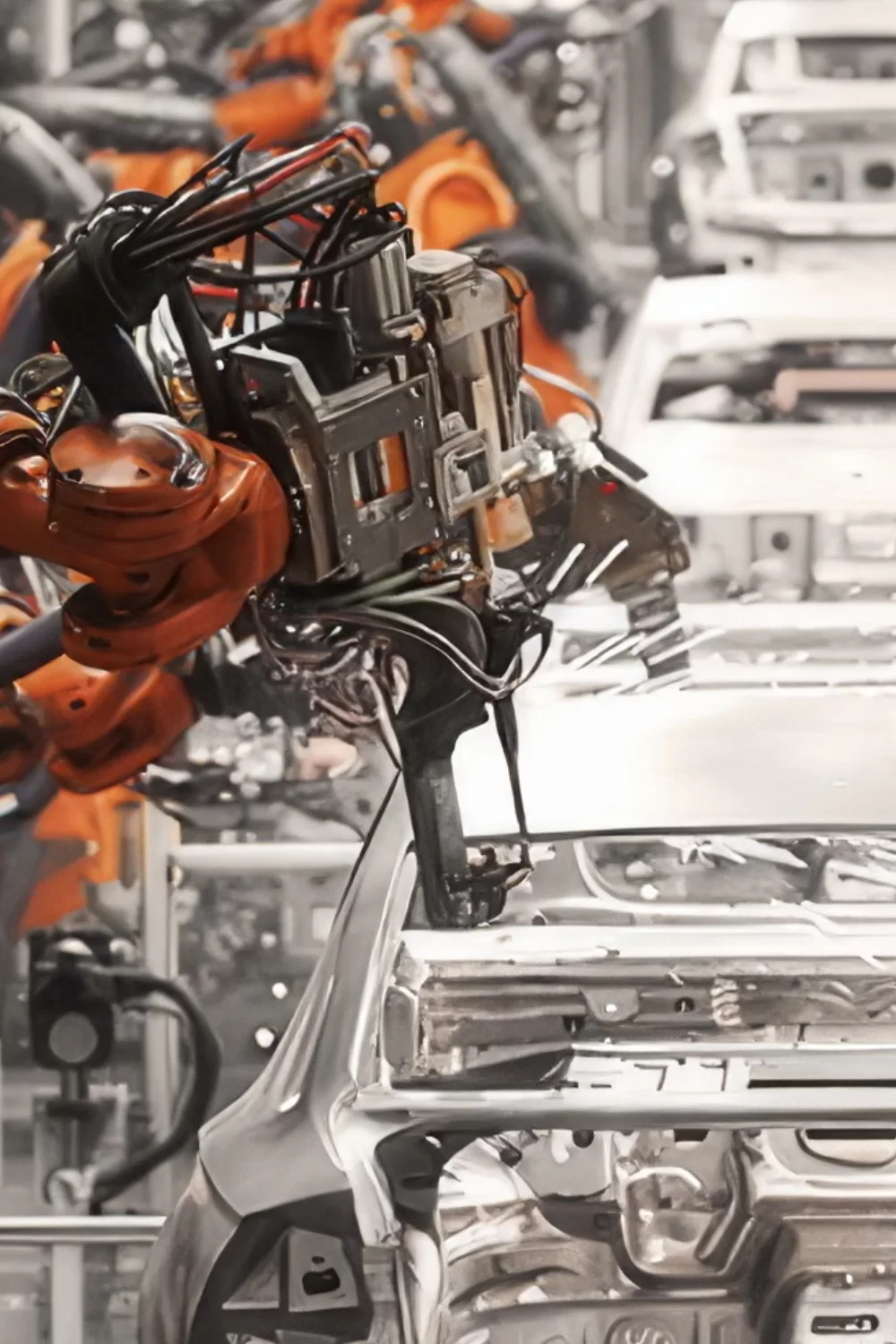
– **Static and Dynamic Loads**: The expected static and dynamic loads that the press – fit connection will experience need to be analyzed. Static loads include forces such as the weight of attached components or constant pressure, while dynamic loads can include vibrations, shocks, and cyclic loads. The design should ensure that the connection can withstand these loads without failure. For example, in an automotive engine compartment, press – fit connections for sensors need to withstand high – frequency vibrations and occasional shock loads.
– **Torsional and Shear Loads**: If the application involves torsional or shear loads, the design of the press – fit connection should be able to resist these forces. This may require additional design features such as anti – rotation mechanisms or a different shape of the male and female components to better distribute the load.
– **Environmental Factors**
– **Temperature and Humidity**: As mentioned earlier, temperature variations can affect the fit due to differences in CTE. Humidity can also impact the connection, especially if it causes corrosion of the components. In a humid environment, using materials with good corrosion resistance or applying protective coatings may be necessary.
– **Chemical Exposure**: In some applications, the press – fit connection may be exposed to chemicals. The materials should be selected to be resistant to the chemicals present in the environment. For example, in a chemical processing plant, connectors may need to be made of materials that can withstand exposure to corrosive chemicals.
– **Electrical Requirements (if applicable)**
– **Electrical Conductivity**: If the press – fit connection is used for electrical applications, such as in a printed circuit board, the electrical conductivity of the connection needs to be considered. The materials used should have low – resistance properties to ensure efficient power and signal transmission.
– **Insulation and Dielectric Properties**: In some cases, the connection may need to provide electrical insulation or have specific dielectric properties. For example, in high – voltage applications, the press – fit connection should be designed to prevent electrical breakdown between adjacent components.
As an alternative to soldering, press fitting has the following advantages: No required soldering or welding experience. Less preparation necessary given its effectiveness on wet, damp or dry pipes. Can take up to 95% less time to install than soldering.
Press-fittings provide a reliable seal, reduce error, and when pressed correctly, are free of leaks. Generally, a press-fit is the fastening of two parts—in this case, inserting a pipe into a fitting by normal force, with the interference holding both parts in place.
Push fit technology has been designed to optimise time efficiency and to help ensure installers are able to work across jobs more effectively. Unlike press fit methods, push fit fittings require no additional tools for installation.
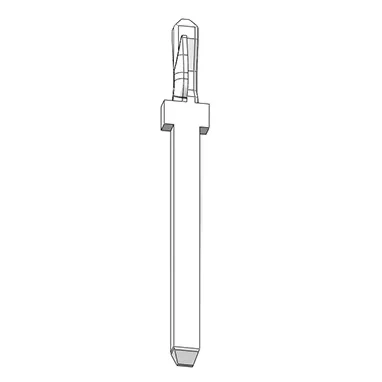
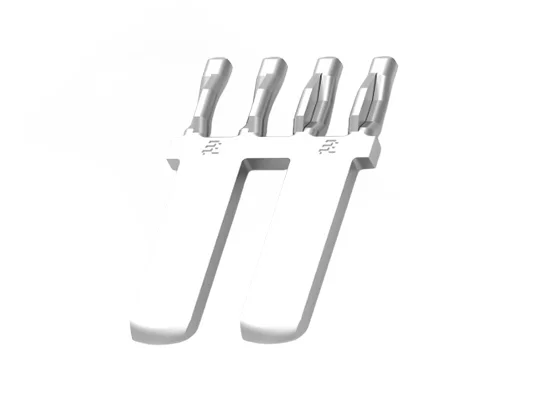
The Press-Fit Technology Is A Solder-Less Termination Technology Used In Electrical Systems Throughout The Interconnection Industry, Which Mechanically And Electrically Joins A Press-Fit Contact To A Printed Circuit Board (Pcb).
The interference fit has a significant impact on the performance of the press – fit connection in the following ways:
### 1. Mechanical Performance
– **Connection Strength**
– **Positive Impact**: An appropriate interference fit is crucial for creating a strong mechanical connection. When the male component is pressed into the female component with the correct amount of interference, the elastic deformation of the female part around the male part generates a frictional force. This frictional force holds the two parts together and provides resistance against forces that could pull the components apart. For example, in a mechanical assembly where a press – fit pin is used to connect two parts that may be subjected to tensile forces, a well – designed interference fit ensures that the connection remains intact under normal operating conditions.
– **Negative Impact**: If the interference fit is too large, it can lead to excessive stress in the components. This excessive stress may cause plastic deformation or even cracking in the female component, especially if it is made of a relatively brittle material. In such cases, the connection may initially seem strong, but over time, it can fail due to the damaged structure of the component. On the other hand, if the interference is too small, the frictional force will be insufficient, and the connection may become loose when subjected to even minor vibrations or external forces.
– **Vibration and Shock Resistance**
– **Positive Impact**: A proper interference fit enhances the vibration and shock resistance of the press – fit connection. The tight fit created by the interference fit helps to dampen vibrations and prevent the male and female components from moving relative to each other during vibration or shock events. This is particularly important in applications such as automotive or aerospace, where components are constantly exposed to vibrations and occasional shocks. For example, in an automotive engine compartment, press – fit connections for sensors need to withstand high – frequency vibrations without loosening.
– **Negative Impact**: Insufficient interference fit can result in the connection being unable to withstand vibrations. As the component vibrates, the lack of a tight fit can cause the male and female parts to gradually separate or move, leading to a loss of electrical or mechanical function. Excessive interference, while providing a tight connection, may also have drawbacks in terms of vibration resistance. If the components are overly stressed due to excessive interference, small cracks or micro – deformations can act as stress concentrators, which may lead to failure during vibration or shock events.
### 2. Electrical Performance (if applicable)
– **Electrical Conductivity**
– **Positive Impact**: In press – fit connections used for electrical applications, the interference fit can have a positive impact on electrical conductivity. A proper interference fit ensures good contact between the male and female components, minimizing the contact resistance. When the two parts are tightly pressed together, there is a larger area of contact, which allows for efficient electron transfer and thus better electrical conductivity. This is crucial for applications such as in printed circuit boards (PCBs) where power and signal transmission rely on low – resistance connections.
– **Negative Impact**: If the interference fit is not properly controlled, it can lead to poor electrical conductivity. For example, if the interference is too large and causes damage to the contact surfaces (such as scratching or deformation), the contact resistance may increase. This can result in power losses, signal attenuation, or even electrical malfunctions in the circuit. Similarly, if the interference is too small, there may be insufficient contact pressure, leading to a higher – resistance connection.
### 3. Long – Term Performance and Durability
– **Stability over Time**
– **Positive Impact**: The right interference fit promotes the long – term stability of the press – fit connection. It helps to maintain the integrity of the connection under various environmental and operating conditions over an extended period. For example, in a building’s electrical system where press – fit connectors are used, a proper interference fit ensures that the connection remains reliable for years, even with temperature and humidity changes.
– **Negative Impact**: Incorrect interference fit can lead to long – term problems. Excessive interference may cause the components to experience continuous stress, which can accelerate wear and tear. Over time, this can lead to loosening of the connection as the material fatigues or as environmental factors (such as temperature cycling) further degrade the connection. Insufficient interference may also lead to loosening over time, especially if the connection is exposed to vibrations or small movements.