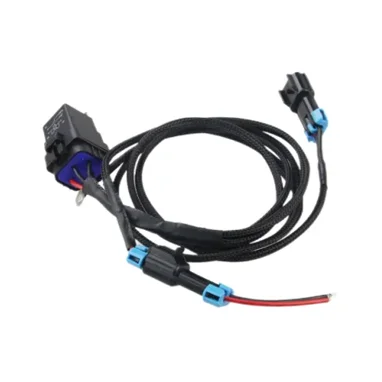
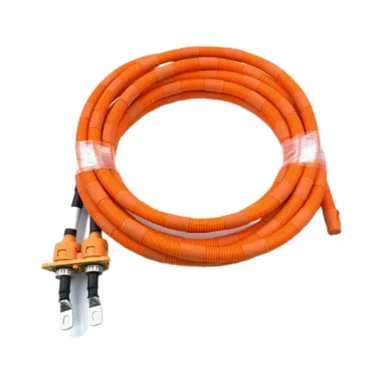
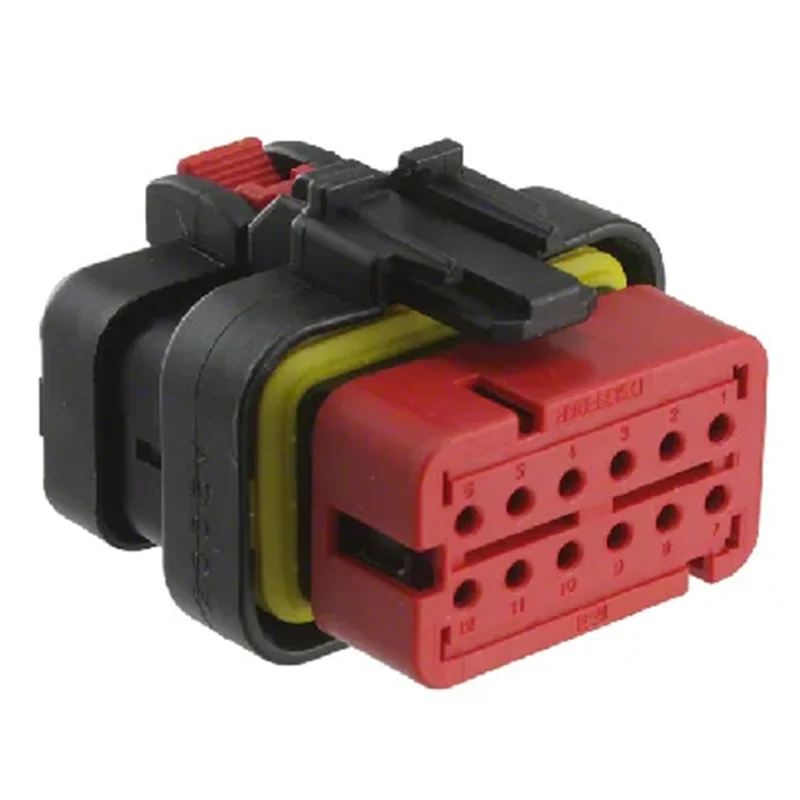
The automotive industry is undergoing a seismic shift, driven by electrification, autonomous driving, and lightweighting. At the heart of this transformation lies a critical yet often overlooked component: automotive wiring harnesses. As vehicles evolve into sophisticated “computers on wheels,” wiring systems must deliver unparalleled reliability, efficiency, and adaptability.
Introduction: The Evolving Role of Wiring Harnesses
Modern vehicles demand more from their electrical architectures than ever before. Wiring harnesses, once simple bundles of copper and insulation, now serve as the central nervous system for advanced technologies like 800V battery systems, LiDAR sensors, and over-the-air (OTA) updates. With the rise of electric vehicles (EVs) and autonomous driving, harnesses must simultaneously handle high-voltage power distribution, high-speed data transmission, and extreme environmental stresses—all while shedding weight to maximize efficiency.
Key Challenges in Modern Wiring Harness Design
High-Voltage Demands
EV architectures operating at 400–800V require harnesses to withstand voltages that can induce corona discharge in traditional materials. For example, cross-linked polyethylene (XLPE) insulation is now critical to prevent arcing, with dielectric strength exceeding 30 kV/mm—a 200% improvement over standard PVC.
EMI/RFI Shielding
Advanced driver-assistance systems (ADAS) rely on noise-free signal transmission. Shielded harnesses using dual-layer protection (braided copper + aluminum foil) reduce electromagnetic interference (EMI) by 40 dB at frequencies up to 3 GHz, ensuring millimeter-wave radar and camera data remain uncompromised.
Weight Optimization
Replacing conventional copper with aluminum alloys reduces harness mass by 50%, while micro-sized cables (0.13 mm² cross-sections) save space in densely packed zones like headliners and door panels.
Innovations Driving the Future of Wiring Harnesses
High-Speed Data and Power Transmission
- Ethernet Backbones: Automotive Ethernet (100BASE-T1) enables 100 Mbps data transfer for autonomous systems, replacing legacy CAN buses.
- Hybrid Conductors: Aluminum-clad copper wires balance conductivity (60% IACS) and weight savings, ideal for EV traction inverters.
Smart and Modular Architectures
- Zonal Design: Centralized ECUs with zone controllers reduce wire length by 25%, cutting complexity in luxury EVs.
- Self-Diagnosing Harnesses: Embedded fiber optics detect insulation cracks with 0.1 mm resolution, enabling predictive maintenance.
Advanced Materials
- High-Temperature Polymers: Silicone-free insulators (e.g., TPE-E) maintain flexibility at -40°C and resist thermal aging at 175°C.
- Flame-Retardant Coatings: UL94 V-0 rated materials prevent flame propagation in battery compartments.
Precision Manufacturing
- Automated Crimping: Robotic terminals achieve ±0.02 mm positioning accuracy, critical for high-voltage connectors.
- Laser Marking: Permanent traceability codes withstand abrasion and chemical exposure (ISO 6722 compliant).
Engineering Solutions for Next-Gen Vehicles
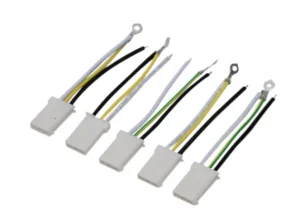
Case Study: Enabling Faster EV Charging
A European EV manufacturer faced overheating in charging port harnesses during 350 kW DC fast charging. Jingu’s solution integrated:
- Liquid-Cooled Cable Assemblies: Silicone hoses circulating dielectric fluid reduced peak temperatures by 25%.
- Embedded NTC Sensors: Real-time thermal monitoring via CAN bus, triggering throttling at 85°C.
Result: 15% faster charging cycles without derating.
Technical Capabilities at Scale
- High-Voltage Expertise: 1000V-rated connectors with HVIL (High-Voltage Interlock Loop) safety, tested to LV214-2016.
- Environmental Resilience: IP6K9K-rated seals withstand 14-day salt spray (ASTM B117) and 20g vibration (IEC 60068-2-64).
- Lightweighting: Aluminum conductors reduce harness weight by 30% in commercial vehicle applications.
The Road Ahead: Wiring Harnesses in 2030
- Wireless Power Transfer: Eliminate physical connectors for low-voltage systems (<48V) using resonant inductive coupling.
- AI-Optimized Routing: Generative design algorithms minimize wire lengths while avoiding thermal hotspots.
- Circular Manufacturing: Recyclable thermoplastic harnesses with ultrasonic welding joints, reducing e-waste.
Conclusion
The future of automotive wiring harnesses lies in balancing contradictory demands: higher voltages and lighter weights, smarter systems and simpler architectures. As vehicles push the boundaries of performance, innovations in materials, manufacturing, and design will ensure harnesses remain the unsung enablers of mobility’s next era.
Jingu Auto Parts combines decade-long expertise with cutting-edge R&D to deliver wiring solutions that meet tomorrow’s challenges today. From 800V EV platforms to autonomous trucking systems, our harnesses are engineered to exceed IATF 16949 and USCAR-2 standards—proven in labs, validated on roads.