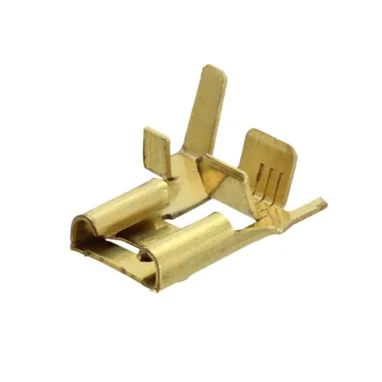
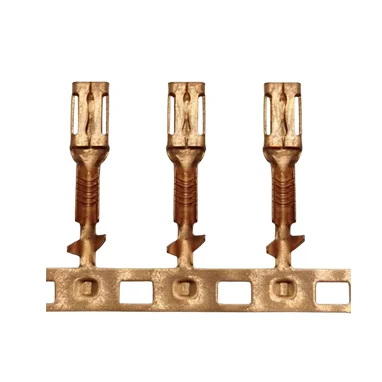
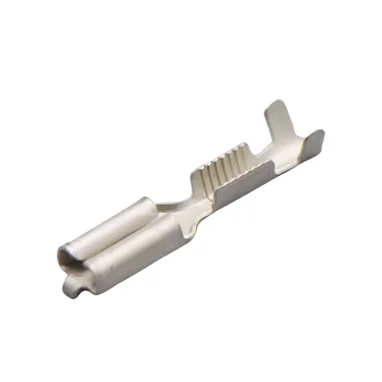
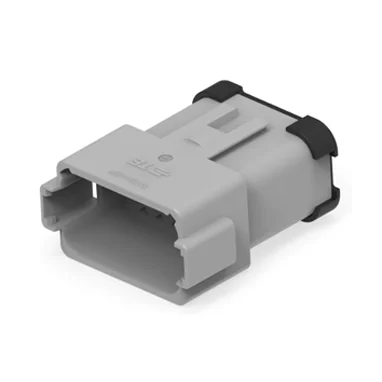
In the automotive industry, connection reliability is one of the most critical factors for vehicle safety and performance. As modern vehicles require more advanced electronic systems, connector technology has evolved to meet higher demands for precision, durability, and conductivity. Among various connection methods, press-fit technology has become a preferred choice for many automotive manufacturers. This article explores what press-fit technology is, how it works, and why it plays a key role in automotive electrical systems.
What Is Press-Fit Technology?
Press-fit technology is a connection method used to mechanically and electrically join terminals and printed circuit boards (PCBs) without soldering. It involves inserting a specially designed terminal pin into a plated through-hole on the PCB. The press-fit pin has a slightly larger diameter than the hole, creating a secure and reliable contact through elastic deformation.
Unlike traditional soldered connections, press-fit joints do not require heat or flux. This eliminates issues such as solder cracks, flux residues, and thermal stress on components. As a result, press-fit technology provides a cleaner, more efficient, and more durable connection method, especially suitable for high-vibration and high-temperature automotive environments.
How Press-Fit Connections Work
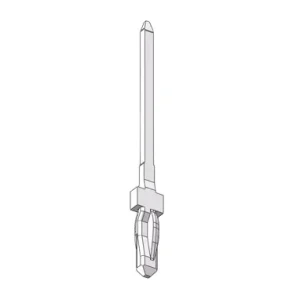
To understand how press-fit technology functions, it’s important to look at the structure of the pin. A press-fit pin is typically designed with a compliant section that compresses as it is inserted into the plated hole. This compression ensures a tight mechanical fit and stable electrical contact.
During insertion, the pin’s compliant area slightly deforms to accommodate the hole size while maintaining consistent pressure. This pressure forms a gas-tight contact area, preventing oxidation and ensuring long-term conductivity. The result is a low-resistance and vibration-resistant electrical connection without the need for soldering.
This method not only simplifies the assembly process but also improves production efficiency. Since no heating or cooling is required, it reduces assembly time and energy consumption, making it ideal for large-scale automotive component manufacturing.
Advantages of Press-Fit Technology in Automotive Applications
Press-fit connections are widely adopted in automotive electrical systems for several important reasons:
- High Reliability: The gas-tight connection between the pin and PCB ensures excellent long-term performance, even under vibration, shock, or temperature fluctuations common in vehicles.
- Cost-Effective Manufacturing: Without soldering, manufacturers save on materials, energy, and processing time while reducing the risk of defects caused by soldering errors.
- Eco-Friendly Production: The absence of flux and solder materials makes the process cleaner and environmentally friendly.
- Easy Maintenance and Replacement: Press-fit components can be inserted and removed without damaging the PCB, simplifying rework and repair operations.
These benefits make press-fit technology an ideal choice for automotive connectors, control boxes, relays, and wiring harness systems, where electrical integrity and durability are essential.
Applications in Automotive Electrical Systems
In modern vehicles, press-fit technology is found in numerous key areas. It is commonly used in:
- Relay Fuse Boxes: Ensuring stable current flow and resistance to heat and vibration.
- Control Units: Providing reliable PCB-to-terminal connections for electronic control modules.
- Wire Harness Systems: Maintaining secure electrical interfaces between circuits.
- Sensor and Connector Modules: Supporting accurate data transmission in engine management and safety systems.
These applications highlight how press-fit technology helps automotive manufacturers achieve better performance and longer product lifecycles while maintaining efficiency in production.
Quality Assurance and Testing of Press-Fit Connections
For press-fit technology to deliver its full benefits, strict quality control is essential. Leading manufacturers perform a series of inspections and tests to ensure connection stability and reliability. Common quality assurance steps include:
- Insertion Force Testing: Ensuring consistent insertion pressure for proper pin-to-hole engagement.
- Contact Resistance Measurement: Verifying low electrical resistance and stable conductivity.
- Vibration and Thermal Cycling Tests: Simulating real automotive conditions to evaluate durability and long-term performance.
These tests ensure that each connector and terminal assembly meets international standards such as IATF 16949:2016, which defines quality requirements for automotive parts production.
Why More Manufacturers Choose Press-Fit Solutions
As vehicles become more complex and electrically advanced, the need for durable and maintenance-free connections continues to grow. Press-fit technology meets this demand by combining mechanical strength with excellent electrical performance.
Many global automakers and parts suppliers now favor press-fit designs for their reliability, precision, and sustainability. By reducing the risks of soldering defects and improving production efficiency, press-fit technology contributes to higher overall quality and product lifespan.
Conclusion: A Reliable Solution for the Future of Automotive Connections
In summary, press-fit technology represents a significant advancement in automotive electrical connection methods. Its solder-free design ensures stronger, cleaner, and more reliable connections that can withstand the harsh conditions of modern vehicles. As the automotive industry continues to embrace electronic integration, press-fit technology will remain a key factor in achieving both performance and production efficiency.
Jingu Auto Parts has extensive experience in producing automotive connectors, terminals, and wiring harness components that incorporate press-fit technology. With advanced equipment, strict quality management, and IATF 16949:2016 certification, Jingu provides high-quality, reliable products for customers worldwide.
Choose Jingu — your trusted partner and professional automotive connector manufacturer.