To begin with, contact resistance is one of the most critical electrical performance indicators of automotive connectors. It directly affects current flow, signal stability, and overall system reliability. In modern vehicles—especially those with complex electronic systems and electric powertrains—even a small increase in contact resistance can lead to voltage drops, heat buildup, and long-term connector failure. Therefore, understanding acceptable contact resistance values for automotive connectors is essential for ensuring safety, durability, and stable performance throughout a vehicle’s service life.
What Is Contact Resistance in Automotive Connectors?
At a fundamental level, contact resistance refers to the additional electrical resistance that appears at the interface where two connector terminals mate. Unlike bulk conductor resistance, contact resistance is generated at microscopic contact points rather than across the entire contact surface. In practice, terminals do not touch across their full area. Instead, electrical current flows through many tiny contact spots formed under mechanical contact force.
Moreover, because metal surfaces are exposed to air, thin oxide films or surface contamination are almost always present. As a result, contact resistance is composed of two parts: constriction resistance caused by limited real contact area, and film resistance caused by oxides or contaminants. Together, these factors define the actual contact resistance of an automotive connector.
Typical Acceptable Contact Resistance Values
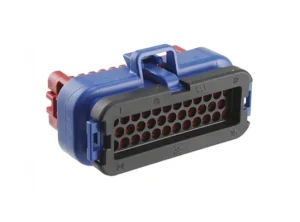
From an industry perspective, acceptable contact resistance values are usually specified in milliohms (mΩ). While exact limits depend on connector type and application, general reference ranges are well established.
For low-current signal connectors, acceptable contact resistance values are typically very low, often below 10 mΩ. In contrast, power connectors used for motors, battery systems, or charging circuits may allow slightly higher values, but they are still carefully controlled to prevent overheating. High-voltage automotive connectors, especially in electric vehicles, follow even stricter validation rules because resistance directly impacts thermal performance and energy efficiency.
Importantly, acceptable contact resistance values are defined not only at initial assembly but also after durability tests such as vibration, temperature cycling, and humidity exposure. This ensures long-term reliability in real vehicle environments.
Automotive Standards Related to Contact Resistance
Next, it is important to understand that acceptable contact resistance values are not chosen arbitrarily. They are defined by international and OEM-specific standards. Standards such as ISO, IEC, USCAR, and LV specifications provide testing methods, limit values, and validation procedures for automotive connectors.
Typically, standards distinguish between initial contact resistance and contact resistance after environmental and mechanical testing. For example, a connector may be required to meet a very low resistance value at the beginning and remain within a defined increase limit after aging tests. This approach ensures that connectors perform reliably over time, not just when new.
Key Factors That Influence Contact Resistance Values
Terminal Material and Plating
First and foremost, terminal material has a direct impact on contact resistance. Copper alloys are widely used due to their high electrical conductivity. However, bare copper oxidizes easily, so surface plating is essential. Tin, silver, and gold plating are commonly applied to reduce oxidation and stabilize contact resistance.
Gold-plated contacts, for instance, offer very stable and low contact resistance, especially for signal-level applications. Tin-plated terminals, while more cost-effective, rely more heavily on contact force to break oxide layers during mating.
Contact Force and Connector Design
Equally important, contact force plays a major role in determining contact resistance. Higher contact force increases the real contact area by deforming surface asperities and breaking oxide films. As a result, well-designed terminal spring structures help maintain low and stable contact resistance over time.
In addition, multi-point or line-contact designs often provide better resistance stability than single-point contacts, especially in vibration-heavy automotive environments.
Surface Condition and Contamination
In real-world applications, surface condition cannot be ignored. Dust, moisture, oil, or chemical residues can increase film resistance at the contact interface. Over time, fretting corrosion caused by micro-movement under vibration can further degrade contact quality.
Therefore, automotive connectors used in harsh environments often rely on sealed housings, proper plating, and controlled assembly processes to protect contact surfaces and maintain acceptable contact resistance values.
Environmental and Aging Effects
Finally, environmental factors significantly affect contact resistance. Temperature cycling can cause material expansion and contraction, altering contact force. Vibration can change contact geometry, while humidity and salt exposure can accelerate corrosion.
Because of these influences, automotive connectors must maintain acceptable contact resistance not only in laboratory conditions but also after exposure to real vehicle stresses.
How Contact Resistance Is Measured
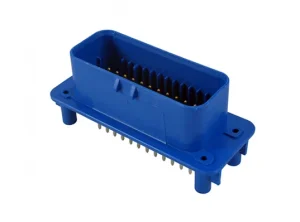
From a testing standpoint, contact resistance cannot be measured accurately using simple two-wire methods. Instead, the four-wire (Kelvin) measurement method is widely used. This technique separates current supply and voltage measurement paths, eliminating lead resistance from the result.
Another common approach is the voltage drop method, where resistance is calculated by measuring voltage drop under a specified current. This method closely reflects real operating conditions and is often used in durability and aging tests.
What Happens When Contact Resistance Is Too High?
When contact resistance exceeds acceptable limits, several problems can occur. Most notably, increased resistance leads to localized heating at the contact interface. Over time, this heat accelerates oxidation, material softening, and loss of contact force, creating a failure cycle.
In addition, high contact resistance causes voltage drops that can interfere with sensor signals, control units, and power delivery. In severe cases, it may result in intermittent faults or complete system failure, directly affecting vehicle safety and reliability.
How Manufacturers Control Contact Resistance
To address these risks, connector manufacturers implement strict control measures. These include optimized terminal geometry, carefully selected materials, controlled electroplating processes, and precise crimping parameters. Automated inspection and validation testing further ensure that contact resistance remains within acceptable limits throughout production.
Application-Specific Considerations
It is also worth noting that acceptable contact resistance values vary by application. Signal connectors, power connectors, and high-voltage connectors all have different performance priorities. Similarly, connectors used in wet zones of the automotive wire harness system require more robust sealing and surface protection than those in dry zones.
Conclusion: Defining and Maintaining Acceptable Contact Resistance
In summary, acceptable contact resistance values for automotive connectors are a key factor in electrical performance, thermal stability, and long-term reliability. By understanding how contact resistance is formed, measured, and controlled, engineers and buyers can make better decisions when selecting automotive connectors.
From material choice and plating to connector design and validation testing, every detail contributes to maintaining stable contact resistance throughout a vehicle’s life cycle.
At Jingu, we focus on delivering high-quality automotive connectors and components designed to meet strict contact resistance and durability requirements. With reliable materials, controlled manufacturing processes, and application-focused solutions, Jingu supports stable electrical performance across demanding automotive environments. If you are looking for a trusted partner in automotive connectivity, Jingu is ready to support your project needs.